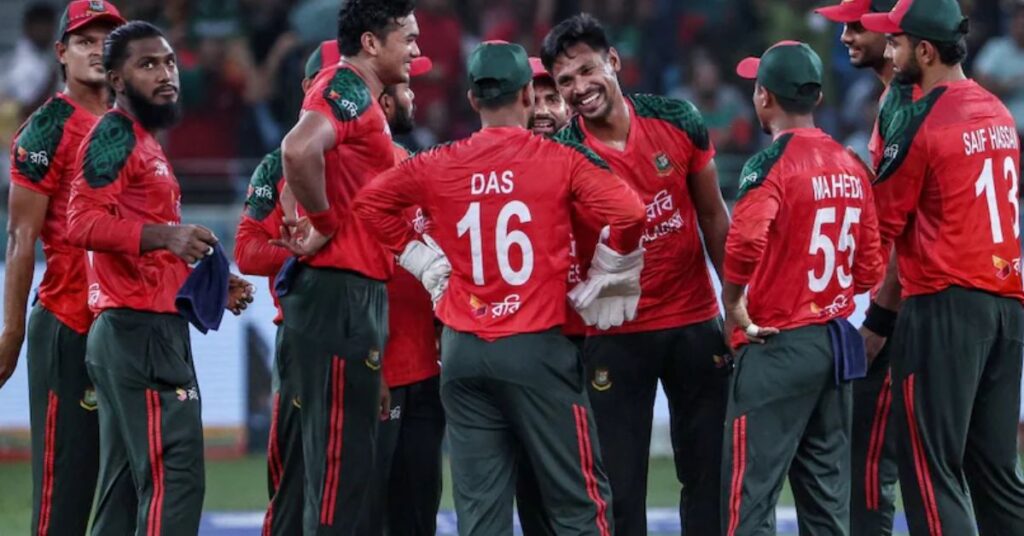

The ICC Men’s T20 World Cup 2026 has been thrown into uncertainty even before a ball has been bowled, as the Bangladesh Cricket Board’s (BCB) participation remains under a cloud, triggering widespread debate, speculation, and diplomatic manoeuvring across the cricketing world. Adding a new layer to the unfolding drama, Scotland have indicated they are “ready” to step in if required, even though the International Cricket Council (ICC) has not formally approached them yet.
This developing situation has rapidly become one of the most talked-about controversies in recent World Cup history. With schedules, groups, commercial interests, and competitive integrity all at stake, the ICC now finds itself under intense pressure to deliver clarity — and soon.
LIVE CONTEXT: Why This Controversy Has Exploded
The controversy centres on Bangladesh’s uncertainty over participating in the T20 World Cup 2026, particularly regarding venues and logistical concerns. While Bangladesh are officially listed as qualified participants, recent developments have raised doubts about whether they will take the field as scheduled.
As reports surfaced of possible withdrawal or non-participation scenarios, attention immediately turned to:
- Replacement protocols
- ICC tournament regulations
- Which team would be next in line
This is where Scotland’s name entered the conversation.
Scotland’s Position: “Ready, But Waiting”
Scotland have made it clear — through indirect but firm messaging — that they are prepared to step in if the ICC requires a replacement team. However, they have also stressed an important point:
There has been no official communication from the ICC so far.
This balanced response reflects Scotland’s respect for process and diplomacy. They are not celebrating prematurely, nor are they lobbying publicly. Instead, they are:
- Staying prepared
- Monitoring developments
- Waiting for formal ICC direction
In modern cricket governance, such restraint is significant.
ICC’s Current Stand: Silence, But Not Inaction
As of now, the ICC has not confirmed any contingency plan publicly, nor has it acknowledged direct talks with Scotland regarding replacement.
However:
- The ICC is reportedly in ongoing discussions with the BCB
- Tournament logistics are being reviewed internally
- Deadlines are approaching rapidly
The absence of a public ICC statement has only intensified speculation.
What Triggered the Bangladesh T20 World Cup 2026 Controversy?
The roots of the controversy lie in Bangladesh’s concerns around tournament arrangements, which reportedly include:
- Venue-related reservations
- Scheduling and logistical challenges
- Broader geopolitical sensitivities
While the BCB has not officially announced withdrawal, delays in confirmation and mixed messaging have created uncertainty — something the ICC can ill afford at this stage of tournament planning.
Why Bangladesh’s Participation Matters So Much
Bangladesh are not just another team in the T20 World Cup ecosystem.
Their participation impacts:
- Group balance and competitiveness
- Broadcast and commercial agreements
- Fan engagement across South Asia
- Tournament credibility
A World Cup without Bangladesh would be unprecedented in the modern era and would represent a major shift in the tournament’s competitive landscape.
Why Scotland Are Being Seen as the Likely Replacement
If Bangladesh were to withdraw or be removed, Scotland are widely viewed as the next team in line, for several reasons:
- T20I Rankings
Scotland are among the highest-ranked Associate teams not currently in the main draw. - Recent Performances
They have consistently challenged Full Member nations in recent ICC events. - Readiness and Infrastructure
Scotland have improved professional structures and player depth. - ICC Pathway Logic
Replacement policies often favour the next best-ranked eligible team.
This makes Scotland a logical — though not yet confirmed — choice.
LIVE TIMELINE: Key Developments So Far
Early Reports
Speculation begins around Bangladesh’s uncertainty over participation.
Media Escalation
Global cricket media reports Scotland as a potential replacement.
Scotland React
Scotland signal readiness but confirm no ICC contact.
ICC Maintains Silence
No official announcement, fueling speculation.
Fans and Experts Weigh In
Debate intensifies across social media and expert panels.
Why the ICC Is Under Immense Pressure
The ICC faces a complex challenge:
- Uphold tournament integrity
- Respect member boards’ concerns
- Avoid setting dangerous precedents
- Finalise logistics without delay
Any decision — whether allowing Bangladesh to stay, relocate matches, or replace them — will have long-term consequences.
What Happens If Bangladesh Stay?
If Bangladesh ultimately confirm participation:
- The controversy may subside quickly
- Scotland remain on standby but uninvolved
- ICC credibility depends on transparency
However, trust may still need rebuilding after weeks of uncertainty.
What Happens If Bangladesh Withdraw?
This is the scenario creating shockwaves.
Possible consequences:
- Scotland or another team drafted in
- Groups reshuffled
- Scheduling adjustments
- Legal and commercial renegotiations
Such a move would be historic and controversial.
Scotland’s Opportunity — and the Weight of It
For Scotland, replacement would be a massive sporting opportunity, but also a heavy responsibility.
It would mean:
- Competing at the highest stage
- Representing Associate cricket globally
- Entering a tournament under unusual circumstances
Scotland’s cautious response shows awareness of both sides of this equation.
Associate Cricket in the Spotlight
This controversy has unintentionally highlighted a larger issue:
How Associate nations fit into ICC’s global structure.
A Scotland inclusion would:
- Validate years of development
- Strengthen Associate cricket pathways
- Encourage competitive balance
But it also raises questions about fairness and qualification integrity.
Fans React: Divided, Emotional, Vocal
Fan reactions have been intense and polarised.
Bangladesh supporters:
- Express frustration and uncertainty
- Demand clarity from BCB and ICC
Scottish fans:
- Hopeful but restrained
- Proud of recognition, cautious of optics
Neutral fans:
- Concerned about World Cup stability
- Curious about Scotland’s potential inclusion
Experts Weigh In: A Governance Test
Cricket analysts have described this episode as:
- “A governance stress test for the ICC”
- “A reminder of fragile international schedules”
- “A moment that could reshape qualification policies”
Most agree transparency will define whether ICC emerges stronger or weaker.
The Commercial Angle Cannot Be Ignored
Beyond cricket, this controversy affects:
- Sponsorship contracts
- Broadcast commitments
- Ticketing and logistics
- Host nation planning
The ICC must balance cricketing fairness with commercial realities — a delicate task.
Legal and Regulatory Considerations
Replacing a Full Member with an Associate team raises legal questions:
- What do ICC regulations specify?
- Are compensation clauses involved?
- How are qualification rights protected?
These factors explain why the ICC is moving cautiously.
Why “LIVE Updates” Matter in This Case
This controversy is evolving by the hour, not weeks.
Key developments could include:
- An ICC statement
- A formal BCB decision
- Confirmation or rejection of Scotland’s inclusion
Until then, the story remains fluid.
Scotland’s Preparation Behind the Scenes
Even without an ICC call, Scotland are believed to be:
- Keeping players on standby
- Reviewing potential schedules
- Staying match-ready
Professionalism demands readiness — and Scotland appear to be embracing it.
Could Another Team Replace Bangladesh Instead?
While Scotland are the frontrunners, alternatives theoretically exist.
However:
- Rankings
- Logistics
- Readiness
all currently favour Scotland if replacement becomes necessary.
Impact on Group Dynamics
Replacing Bangladesh would:
- Change competitive balance
- Affect qualification probabilities
- Shift tournament narratives
It would be one of the biggest structural changes in T20 World Cup history.
What the ICC Needs to Do Next
To stabilise the situation, the ICC must:
- Communicate clearly and publicly
- Set firm deadlines
- Explain contingency plans
- Protect tournament integrity
Delay only amplifies uncertainty.
A Bigger Question: How Robust Is ICC Planning?
This episode raises a broader issue:
Are ICC events prepared for geopolitical and logistical disruptions?
Future tournaments may need:
- Stronger contingency frameworks
- Clearer replacement protocols
- Better communication strategies
What to Watch For in the Coming Days
Cricket fans should closely monitor:
- Official ICC announcements
- Statements from BCB
- Scotland’s formal response if contacted
The next update could redefine the entire tournament.
Could This Change ICC Policy Forever?
If Bangladesh are replaced:
- Qualification systems may be reviewed
- Associate pathways could be strengthened
- Tournament governance could evolve
This controversy may have lasting effects beyond 2026.
LIVE STATUS (As of Now)
- Bangladesh: Participation uncertain
- Scotland: Ready, but not contacted
- ICC: In talks, no public confirmation
- Tournament: Awaiting clarity
Conclusion
The Bangladesh T20 World Cup 2026 participation controversy has become one of the most dramatic pre-tournament situations in modern cricket. With Scotland openly stating readiness to replace Bangladesh — yet confirming no call from the ICC so far — the spotlight remains firmly on cricket’s governing body.
This is not just about one team or one tournament. It is about governance, transparency, opportunity, and trust in global cricket. Whether Bangladesh ultimately play or Scotland step in, the way the ICC handles this situation will be remembered long after the World Cup ends.
For now, the cricketing world waits — and watches — as one of the most extraordinary World Cup stories continues to unfold.